the curriculum
A comprehensive, gamified, peer-driven learning journey. The 42 Wolfsburg program equips you with technical expertise, adaptability, autonomy, and creativity, ensuring you remain relevant in the fast-paced digital tech industry.
the 42 methodology.
We stripped away the traditional classroom and built a model that forces you to think, act, and code like a real software engineer. No professors, no lectures, no exams to memorize for.
the engineering mindset.
- Autonomous Problem Solving. The ability to learn any new technology or framework purely through documentation, experimentation, and peer dialogue.
- Code Review & Git. Mastering the actual workflows of the industry by rigorously reviewing your peers' code, and having yours reviewed in return.
- Adaptability. Transitioning seamlessly from low-level memory management in C to high-level AI architectures in Python.
peer-to-peer evaluation.
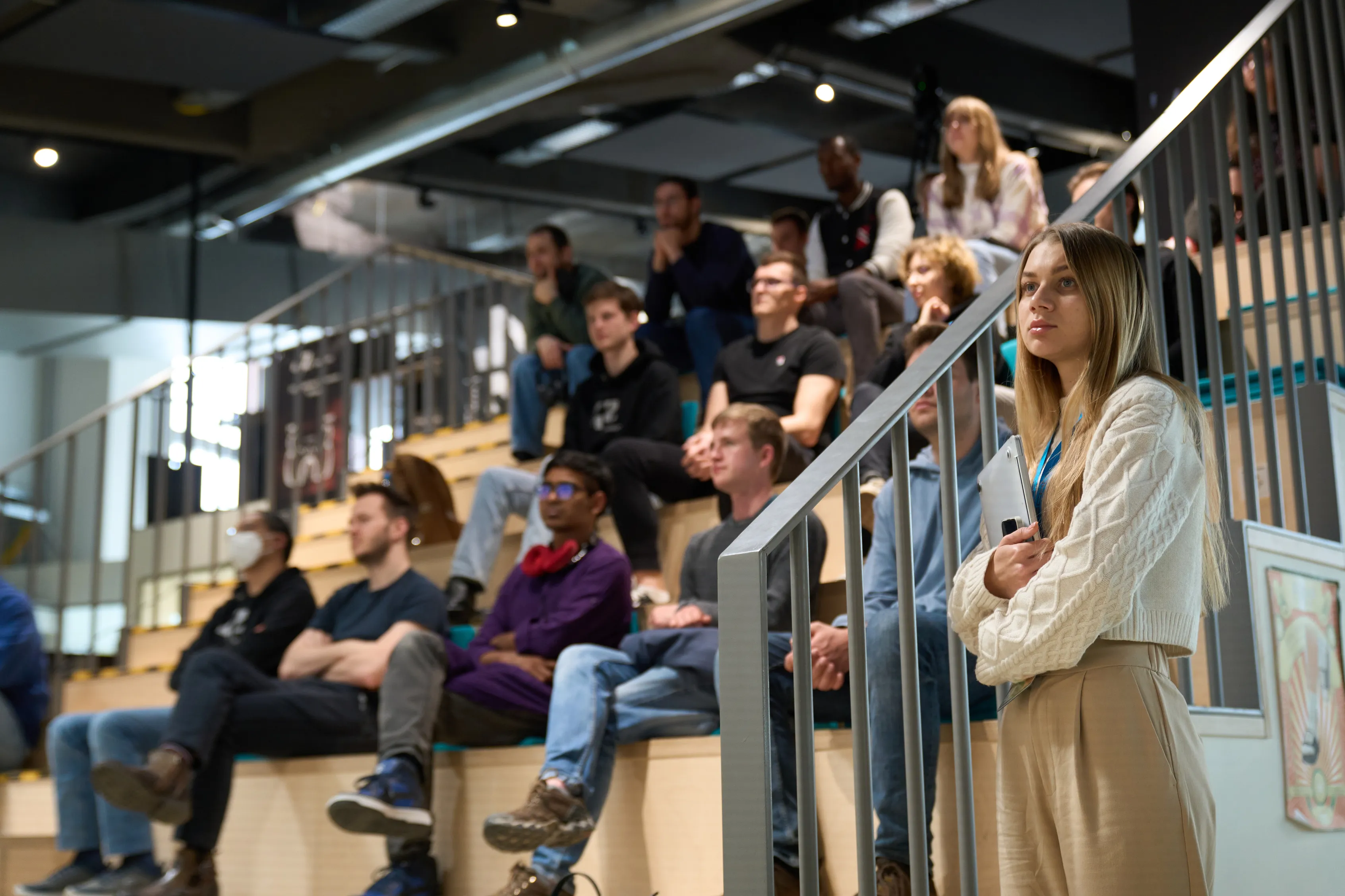
sys::p2pYou learn by teaching others. At 42, there is no central authority handing out answers. When you finish a project, you must defend your code to your peers. In turn, you evaluate theirs. This constant exchange develops technical leadership, sharpens your ability to read foreign codebases, and forces you to communicate complex logic clearly.
100% project-based.
sys::buildThere are no theoretical lectures. From day one, you are handed real-world engineering briefs. You will build your own C library, write your own shell, and engineer 3D raycasters. Every line of code contributes to a GitHub profile that becomes your professional portfolio.
try, fail, retry.
sys::masteryWe don't do traditional grades. A project is either completely functional, or it fails. If your code breaks during the automated Moulinette tests or peer review, you debug it, fix it, and submit it again. This mastery-based approach builds an intense resilience to failure—the defining trait of a great developer.
gamified progression.
sys::xpThe curriculum is structured like a massive skill tree. You earn experience points (XP) for every completed project, unlocking new levels and specialized branches. Reach Level 11 to unlock the Advanced Curriculum (Master's equivalent).

peer_to_peer_logic

the_fablab

code_review
collective_synergy
your journey.
From your first line of C to a Master's-level engineer. Five phases, each one unlocked by the last.
the piscine.
The selection process. A rigorous four-week sprint assessing problem-solving abilities and potential, not previous experience. It’s a deep dive into problem-solving, collaboration, and learning from failure.
core curriculum.
Your foundation. You'll complete a minimum of 27 hands-on projects, progressing through seven thematic modules, mastering 137+ skills in areas like C programming, algorithms, networks, and Python object-oriented design. Reach level 10+ to advance. The pace is yours: 18 months is the average, 24 the maximum.
first internship.
Your skills meet a real engineering team. Paid at minimum wage or above, because we recognise the worth our students bring to a codebase.
specialisation.
Go deep: AI & Data, Cybersecurity, Web/Mobile Dev, or Systems. Finish trained at a Master's level.
second internship & graduation.
The final proving ground. Tackle real tech challenges, complete your studies, and step into the industry with a portfolio instead of promises.
what you master.
Seven core modules with 27 hands-on projects mastering 137+ skills. Reach Level 10+ through competency-based, peer-validated progression.
programming fundamentals
Master C programming from the ground up. Build custom tools and libraries while understanding memory allocation, pointers, and lower-level execution.
/system & network
Unlock concurrent systems with multithreading, synchronization primitives, resource management, and network protocol design across Unix environments.
/algorithmics
Design efficient algorithms balancing complexity and resource constraints. Master optimization strategies, sorting, graph traversal, and multi-agent pathfinding.
/artificial intelligence
Build intelligent applications leveraging Large Language Models, prompt engineering, Retrieval-Augmented Generation (RAG), and agentic AI systems.
/administration system
Step into the role of a sysadmin to build and secure server infrastructure. Master OS installation, virtualization, firewall policies, and Docker containerization.
/object oriented
Master Python and modern software design principles. Architect maintainable applications using classes, inheritance, design patterns, and functional paradigms.
/web development
Build full-stack applications with dynamic interfaces, robust backend services, REST API design, database querying, authentication, and containerized deployment.
/